
AI Search Visibility: Tracking and Optimising Your Brand in AI-Powered Search
Key Takeaways
AI search visibility measures how often your brand appears in AI-generated answers across platforms like ChatGPT, Google AI Overviews, and Gemini, with 9.46% of desktop keywords now showing AI Overviews
Traditional SEO rankings alone are insufficient - brands need Generative Engine Optimisation (GEO) and Answer Engine Optimisation (AEO) to capture AI-driven traffic and mentions
Third-party citations drive most AI brand mentions, making external authority and media coverage more critical than owned content optimisation.
Early adopters gain a competitive advantage as most businesses haven’t yet optimised for AI search, creating a first-mover opportunity in 2024-2025
AI visibility tracking requires specialised tools and methodologies since traditional SEO metrics don’t capture AI mention frequency, citation sources, or competitive AI performance.
The digital marketing landscape is experiencing a fundamental shift. While marketing teams have spent years perfecting their approach to traditional search engines, AI platforms are rapidly changing how users discover and evaluate brands. AI search visibility has emerged as the new frontier for brand presence, measuring not just website rankings but how frequently and prominently your business appears in ai AI-generated answers across multiple platforms.
This comprehensive guide will equip you with the knowledge and strategies needed to track, measure, and optimise your brand’s visibility in the growing AI search landscape. Whether you’re managing a single website or overseeing enterprise-level digital presence, understanding AI search visibility is no longer optional—it’s essential for maintaining competitive advantage in 2024 and beyond.
Understanding AI Search Visibility
AI search visibility represents a fundamental departure from traditional search engine optimisation. While conventional SEO focuses on achieving high rankings in search results to drive click-through traffic, AI visibility centres on being mentioned, cited, and recommended within AI responses themselves. When users query platforms like ChatGPT, Google AI Overviews, or Gemini, they receive direct answers rather than lists of links to explore.
This shift creates what experts call the “great decoupling”—a phenomenon where brand visibility can increase significantly even as traditional website traffic decreases. Research indicates that pages appearing in Google AI Overviews experience approximately 34.5% fewer clicks compared to traditional featured snippets, yet these same pages gain massive exposure through AI mentions and recommendations.
The transformation affects how AI sees and processes content. Unlike traditional search engines that primarily match relevant keywords to indexed pages, AI powered search platforms analyse content for authority, accuracy, and contextual relevance. They synthesise information from multiple sources to provide comprehensive answers, fundamentally changing what matters for visibility.
Modern AI platforms operate through sophisticated natural language understanding systems. When someone asks ChatGPT for restaurant recommendations or queries Google’s AI about business software solutions, these systems don’t simply return ranked lists. Instead, they generate conversational responses that may mention specific brands, cite authoritative sources, and provide direct recommendations based on their training data and real-time search capabilities.
Why AI Search Visibility Matters for Your Business
The statistics surrounding AI adoption in search are compelling. Google AI Overviews now appear in approximately 16% of US desktop searches as of 2024, representing millions of daily interactions where traditional organic results take secondary priority. This trend is accelerating rapidly as users become more comfortable with conversational AI interfaces.
Consumer behaviour patterns reveal the true impact of AI search. When users receive comprehensive answers from AI platforms, they’re less likely to visit multiple websites for comparison shopping or research. This creates a winner-takes-all dynamic where brands mentioned prominently in AI responses capture disproportionate attention and trust.
The competitive advantage for early adopters is substantial because most businesses haven’t yet developed AI optimization strategies. Companies that establish strong ai brand visibility now position themselves to dominate their market segments as AI adoption continues expanding. This first-mover advantage becomes particularly valuable when considering that AI platforms often reference the same authoritative sources repeatedly, creating compound visibility benefits over time.
From a business perspective, AI visibility impacts every stage of the customer journey. Awareness building traditionally required extensive content marketing and SEO efforts to capture top-of-funnel traffic. Now, a single mention in an AI response can introduce thousands of potential customers to your brand simultaneously. Purchase intent acceleration occurs when AI platforms specifically recommend your products or services in response to buying-related queries.

Brand authority establishment through AI mentions carries unique weight because users perceive AI recommendations as objective and well-researched. When ChatGPT search or Google’s AI consistently cite your business as an authority in your field, it builds trust more effectively than traditional advertising or even organic search rankings.
Major AI Platforms You Need to Track
Google AI Overviews and AI Mode
Google’s AI integration represents the most significant development in search since the introduction of featured snippets. Google AI Overviews appear for complex queries where users benefit from synthesised information rather than simple link lists. These overviews typically draw citations from top-10 ranking pages, but the selection process prioritises content quality, recency, and authoritative signals over pure ranking position.
Google AI mode extends this functionality by providing conversational responses to follow-up questions. When users engage with AI mode, they’re entering a dialogue where your brand could be mentioned multiple times throughout the conversation. Tracking visibility requires monitoring both initial mentions and sustained presence throughout extended AI conversations.
The technical analysis reveals that Google’s AI tends to favour content with clear structure, recent updates, and strong external validation. Pages that appear in AI Overviews often feature comprehensive topic coverage, relevant schema markup, and citations from other authoritative sources. Understanding these patterns helps prioritise optimisation efforts for maximum AI visibility.
ChatGPT and ChatGPT Search
ChatGPT’s approach to brand mentions differs significantly from Google’s methodology. The platform draws from extensive training data supplemented by real-time search capabilities through ChatGPT search functionality. This dual-source approach means brands can appear in responses both from historical training data and current web content.
ChatGPT search integration introduces new opportunities for timely brand visibility. When users ask about recent developments, product launches, or current market conditions, ChatGPT search accesses fresh information and may cite your latest content or news coverage. This real-time component makes content freshness and media coverage particularly valuable for ChatGPT visibility.
The platform’s conversational nature creates opportunities for sustained brand presence throughout extended interactions. Users often ask follow-up questions, and brands that establish topical authority across related subjects gain repeated mentions within single conversation threads. This compound visibility effect makes comprehensive content strategy essential for maximising ChatGPT presence.
Gemini, Claude, and Perplexity
Each AI platform employs distinct citation methodologies and content preferences. Gemini integrates closely with Google’s knowledge graph and tends to favour authoritative sources with strong domain reputation. Claude emphasises factual accuracy and often cites academic or research-based sources. Perplexity focuses on current information and frequently references recent news articles and industry reports.
Multi-platform tracking becomes essential because user preferences vary significantly across AI tools. Business professionals might rely heavily on Claude for research tasks, while consumers increasingly use ChatGPT for shopping decisions. Missing visibility on any major platform represents lost opportunities to influence your target audience.
Platform-specific optimisation considerations include understanding each AI’s unique strengths and user demographics. Technical analysis shows that while the underlying optimisation principles remain consistent, content formatting and citation signals vary between platforms. Successful AI visibility strategies account for these differences while maintaining consistent brand messaging across all platforms.
How to Measure Your AI Search Visibility
Manual Testing Methods
Manual testing provides essential baseline insights for understanding your current AI visibility. Start by compiling a list of common customer questions, product-related queries, and industry topics relevant to your business. Test these queries across multiple AI platforms systematically, documenting which platforms mention your brand and in what context.
The step-by-step testing process involves querying each AI platform with identical questions while varying phrasing and approach. Ask direct questions like “What are the best accounting software options for small businesses?” alongside conversational queries such as “I need help choosing accounting software for my startup.” Document not only whether your brand appears but also its position, context, and any competitive mentions.
Query variation testing reveals important patterns about AI response consistency. The same question asked multiple times may generate different responses, and slight phrasing changes can significantly impact which brands receive mentions. This variation makes sustained tracking essential rather than one-time testing.
Free tools like Ahrefs Webmaster Tools provide valuable insights into AI-driven visitor behaviour. By analysing traffic patterns and user journeys, you can identify pages that successfully attract visitors through AI recommendations. This data helps validate your manual testing observations and guides content optimization priorities.
Automated AI Visibility Tracking Tools
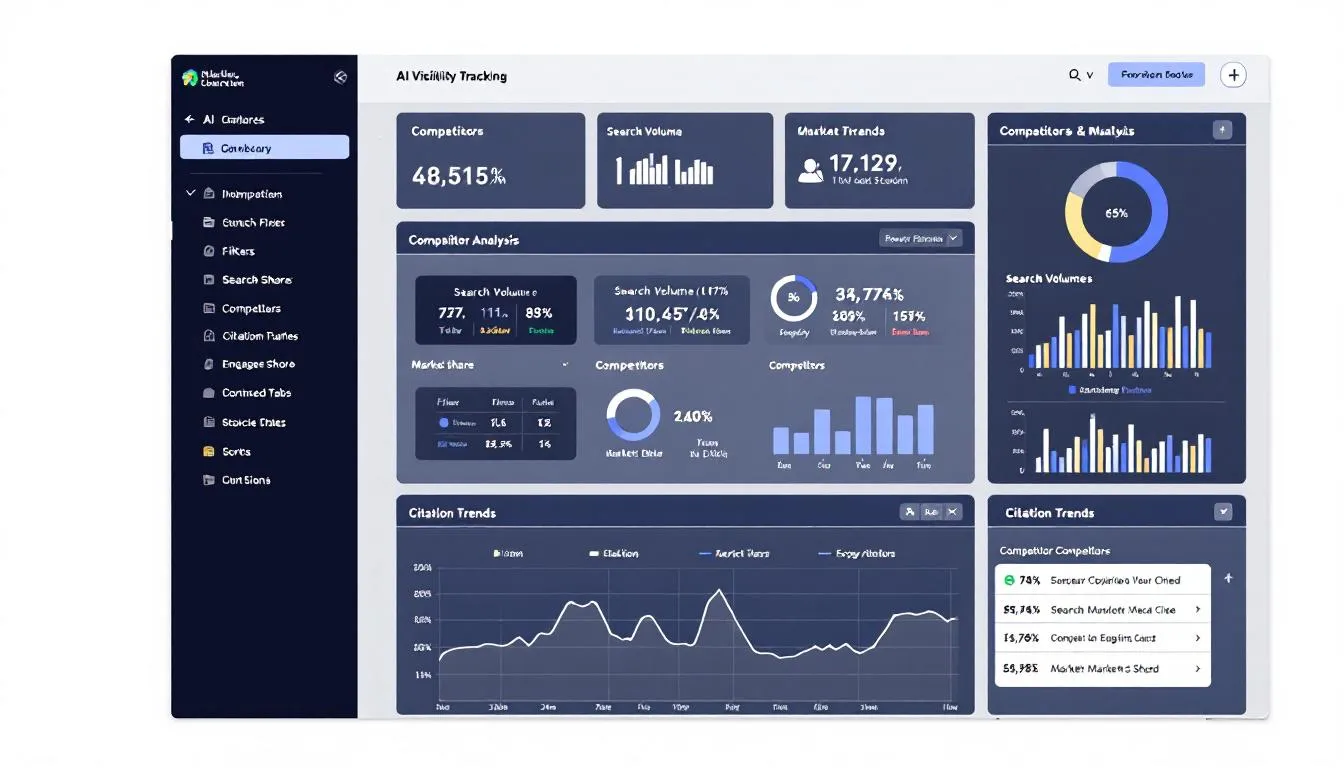
Enterprise solutions like SE Ranking’s AI Search Toolkit and Brand Radar enable large-scale monitoring across millions of prompts and platforms simultaneously. These tools automate the manual testing process while providing historical data trends, competitive analysis, and comprehensive reporting capabilities.
Advanced features in automated tracking platforms include competitor performance benchmarking, citation source analysis, and sentiment monitoring. These tools identify not just whether your brand appears in AI responses but also track the context, tone, and competitive landscape surrounding those mentions.
The limitations of current AI tracking tools include incomplete platform coverage and methodological variations between providers. Most tools focus heavily on Google AI Overviews while providing limited coverage of ChatGPT, Claude, or Perplexity responses. Additionally, AI response variability makes it challenging to establish consistent baseline metrics.
ROI measurement capabilities in tracking platforms help justify investment in AI optimization efforts. While direct conversion tracking from AI mentions remains difficult, these tools provide valuable data about brand awareness trends, competitive positioning, and topic authority development that supports broader marketing objectives.
Generative Engine Optimization (GEO) Strategies
Generative Engine Optimization represents a new discipline focused on optimising content specifically for AI citation rather than traditional click-through traffic. Unlike traditional SEO, which optimises for ranking algorithms, GEO optimises for AI understanding, synthesis, and recommendation patterns.
Content structuring for AI readability requires clear hierarchy, direct answers, and logical information flow. AI platforms favour content that provides immediate value without requiring extensive interpretation. Use bullet points, numbered lists, and clear subheadings that help AI systems parse and extract relevant information efficiently.
Authority building through third-party citations becomes crucial because AI platforms weight external validation heavily in their recommendation algorithms. Focus on earning mentions and citations from authoritative industry publications, research institutions, and established media outlets. These external signals carry more weight than self-promotional content in AI citation decisions.
Topical authority development requires comprehensive coverage of your core subjects alongside related topics. AI platforms favour sources that demonstrate expertise across interconnected themes rather than narrow specialisation. Create content hubs that address customer questions from multiple angles while maintaining clear expertise indicators.
The most effective GEO strategies avoid direct self-promotion in favour of valuable information provision. AI platforms are sophisticated enough to recognise and potentially penalise overtly promotional content. Instead, focus on becoming an authoritative information source that naturally earns citations through content quality and expertise demonstration.
Answer Engine Optimization (AEO) Tactics
Answer Engine Optimization extends traditional SEO principles to optimise specifically for AI-generated responses and voice search results. AEO tactics focus on providing direct, conversational answers to user questions while maintaining the structure and formatting that AI engines prefer.
Featured snippets optimization remains relevant because many AI platforms source information from existing snippet-optimised content. However, AEO requires broader consideration of natural language patterns and conversational query structures. Users ask AI platforms questions differently than they type search queries, using more complete sentences and follow-up questions.
Schema markup implementation helps AI platforms understand content context and relationships more effectively. Structured data provides clear signals about content type, authorship, publication dates, and topical focus that enhance AI comprehension. Focus on implementing relevant schema types including FAQ, How-To, Article, and Organization markup.
Natural language optimization for conversational query patterns involves understanding how people actually speak to AI assistants. Analyse customer support logs, voice search queries, and social media questions to identify natural phrasing patterns. Incorporate these conversational elements into your content while maintaining professional quality.
Structured formatting guidelines for AEO include using clear headings, short paragraphs, and scannable content layouts. AI platforms prefer content they can easily parse and extract, making readability optimization essential for citation success. Use formatting that serves both human readers and AI processing requirements.
Content Optimization for AI Platforms
High-Citation Content Formats
Specific content types consistently earn more AI citations than others. Listicles perform exceptionally well because they provide structured information that AI platforms can easily extract and reference. How-to guides earn frequent citations when they provide step-by-step solutions to common problems. Comparison articles gain citations when they offer balanced evaluations of different options or approaches.
Research-backed content with original data or insights attracts AI citations because platforms prioritise authoritative information sources. Conduct industry surveys, compile statistics, or provide unique analysis that other sources will reference. This original research becomes citation-worthy content that establishes your authority across multiple AI platforms.
Content freshness preferences in AI differ from traditional search patterns. AI platforms may favour recently published content for current events or trending topics but also value comprehensive, evergreen resources for fundamental concepts. Balance timely content creation with sustained investment in comprehensive resource development.
Primary touchpoint optimization focuses effort on pages that receive the majority of AI traffic. Research indicates that homepages, key product pages, and primary landing pages typically account for 80% or more of AI-driven visibility. Prioritise these high-impact pages for comprehensive optimization while maintaining quality across your entire site.
Third-Party Authority Building
Most AI mentions originate from third-party sources rather than owned content, making external authority building crucial for AI visibility. Develop strategies specifically designed to earn citations on authoritative external websites through guest contributions, expert commentary, and thought leadership positioning.
User-generated content platforms including Reddit, YouTube, and industry forums provide opportunities for AI citation. AI platforms frequently reference discussions, reviews, and community-generated content when responding to user queries. Engage authentically in relevant communities while providing valuable insights that others will reference.
PR and media strategy designed for AI citation capture differs from traditional publicity approaches. Focus on securing coverage in publications and sources that AI platforms already cite frequently. Research which media outlets appear most often in AI responses within your industry and prioritise relationship building with those sources.
Identifying high-authority platforms already cited by AI in your industry requires systematic analysis of current AI responses. Study which sources consistently appear in AI citations for industry-relevant queries, then develop strategies to earn mentions or citations from those same authoritative sources.
Competitive AI Visibility Analysis
Comprehensive competitive analysis in AI search requires different methodologies than traditional SEO competitive research. Begin by identifying AI mention gaps where competitors appear in responses but your brand doesn’t. This analysis reveals specific topics, questions, and platforms where you lack visibility.
Citation gap analysis helps identify content topics where rivals consistently earn AI citations. Study the specific content formats, topics, and approaches that competitors use to gain AI mentions, then develop superior resources that address the same user needs more comprehensively or accurately.
Competitor monitoring across multiple AI platforms provides strategic intelligence about emerging opportunities and threats. Track not only which competitors appear in AI responses but also monitor their frequency, context, and positioning relative to your brand. This intelligence informs both defensive and offensive strategy development.
Benchmarking methodologies for measuring relative AI visibility performance require establishing baseline metrics and tracking trends over time. Because AI responses vary significantly, focus on directional trends and relative positioning rather than absolute numbers. Monitor your brand’s share of voice in AI responses compared to key competitors.
Framework development for systematic competitive analysis includes regular testing schedules, standardised query lists, and consistent documentation methods. Create processes that team members can execute reliably while building historical databases that reveal long-term trends and opportunities.
Enterprise AI Visibility Solutions
Enterprise-grade platforms like Semrush Enterprise AI Optimization and Profound offer comprehensive AI visibility management for organizations requiring large-scale monitoring and optimization capabilities. These solutions provide features including multi-platform tracking, team collaboration tools, and advanced analytics that smaller tools cannot match.
SOC 2 compliance, SSO integration, and security features make enterprise platforms suitable for organizations with strict data governance requirements. These platforms maintain the security standards necessary for handling sensitive competitive intelligence and customer data while providing the transparency needed for enterprise decision-making.
Custom pricing models and premium support options for enterprise clients typically include dedicated account management, custom integration development, and priority technical support. Enterprise pricing reflects the comprehensive nature of these platforms and the specialized expertise required to implement them effectively.
Integration capabilities with existing marketing technology stacks help enterprises maximise their investment in AI visibility tools. Look for platforms that connect with your current SEO tools, content management systems, and analytics platforms to create seamless workflows and unified reporting.
Advanced features in enterprise solutions include automated competitive alerting, custom dashboard development, and API access for building proprietary tools. These capabilities support sophisticated analysis and optimization programs that require more flexibility than standard software packages provide.
Future of AI Search Optimisation
The evolution toward real-time search integration in future AI models like GPT-5 will significantly impact content strategy and optimization priorities. As AI platforms gain more current information access, content freshness and timely optimization will become increasingly important for maintaining visibility.
Consumer and business adoption of AI search continues accelerating, with projections indicating that AI-powered search will account for 25-30% of information-seeking activity by 2025. This growth trajectory suggests that AI optimization will transition from experimental to essential for most businesses within the next two years.
Emerging platforms and technologies requiring AI visibility consideration include voice assistants, mobile AI integration, and industry-specific AI tools. As AI capabilities expand into specialized domains like legal research, medical information, and financial analysis, businesses will need to optimize for platform-specific requirements and audiences.
Timeline expectations for mainstream AI search adoption suggest that businesses have approximately 12-18 months to establish strong AI visibility before competition intensifies significantly. Organizations that begin optimization efforts in 2024-2025 will likely maintain competitive advantages as the market matures.
The increasing sophistication of AI platforms will likely improve source attribution and citation transparency, making it easier to track and optimize for AI visibility. However, this evolution will also increase competition as more businesses recognise the importance of AI optimization and invest in comprehensive strategies.

FAQ
How is AI search visibility different from traditional SEO rankings?
AI search visibility measures brand mentions and citations in AI-generated responses across platforms like ChatGPT and Google AI Overviews, while traditional SEO focuses on website rankings in search results. AI visibility emphasizes being referenced and recommended by AI rather than clicked through from search results. The key difference lies in the shift from driving traffic to earning mentions and recommendations within AI-generated answers.
Which AI platforms should I prioritize for tracking my brand visibility?
Focus on Google AI Overviews (appearing in 16% of US searches), ChatGPT/ChatGPT Search, and Gemini as the primary platforms, with secondary monitoring of Claude and Perplexity. Platform priority depends on your audience, but Google AI Overviews and ChatGPT currently drive the most consumer AI search behavior. Business-focused brands might also prioritise Claude for professional research queries.
Can I improve AI visibility without specialized tools?
While manual testing across AI platforms provides basic insights, scaling AI visibility optimization requires dedicated tools due to the complexity of monitoring multiple platforms, tracking competitor performance, and analyzing citation sources. Manual methods work for initial assessment but aren’t sustainable for ongoing optimization efforts or comprehensive competitive analysis.
How long does it take to see improvements in AI search visibility?
AI visibility improvements can occur within weeks for fresh content and trending topics, but building consistent AI authority typically takes 3-6 months of sustained optimization efforts. Results depend on existing domain authority, content quality, and competitive landscape in your industry. Third-party citation building often takes longer but provides more sustained visibility benefits.
What’s the ROI of investing in AI search optimization?
Early data shows AI-optimized brands capture higher share of voice in AI responses and maintain visibility as search behavior shifts toward AI platforms. While direct conversion tracking from AI mentions is still developing, brands report increased brand awareness and qualified traffic from AI-driven discovery, particularly valuable given the first-mover advantage in 2024-2025. The investment in AI optimization helps future-proof digital marketing strategies as AI adoption accelerates.

Your first AI Search Optimised article could be live within 5 days
Experience the power of AI-assisted, human-verified content made for the next era of search. See how AISO content helps your business get found — and referenced — across platforms like ChatGPT, Google Gemini, Perplexity, Claude and Google AI Overviews.